
Source
Where it comes from.
Refined salmon oil (Salmo salar) pressed adjacent to the harvesting station, within hours of catch. This gives meaningfully lower starting peroxide and free-fatty-acid values than oils made from transported or stored by-products. HACCP-approved for human-grade production.
Specification
Typical specification.
| Fatty-acid composition | |
|---|---|
| Total omega-3 | Min 17% |
| EPA | Min 5% |
| DHA | Min 4% |
| DPA | Min 1% |
| Oxidation parameters | |
| TOTOX (total oxidation) | Max 10 |
| Peroxide value | Max 1 |
| Anisidine value | Max 10 |
| Free fatty acids | Max 0.5% |
| Acid value | Max 1 |
Form · Refined, deodorised · Heavy metals & contaminants, full panel in spec sheet
Applications
What brands use it for.
A versatile EPA/DHA base for general-purpose omega-3 supplements, chosen where freshness and a low oxidation baseline matter to the finished product.
Differentiator
What sets it apart.
Pressed within hours of harvest, salmon oil starts from a very low oxidation baseline: peroxide value to a maximum of 1 and free fatty acids to a maximum of 0.5%, with total omega-3 at a minimum of 17%.
Fatty-acid science
What the fatty acids support.
Heart function
EPA and DHA contribute to normal heart function (EFSA authorised at 250 mg/day in the finished supplement, EU Reg. 432/2012).
Brain function
DHA contributes to maintenance of normal brain function at 250 mg/day (EU Reg. 432/2012).
Vision
DHA contributes to maintenance of normal vision at 250 mg/day (EU Reg. 432/2012).
These reflect established research on the fatty acids the oil contains. Health claims on finished supplements are the brand owner's regulatory responsibility.
Formats
Bulk delivery.
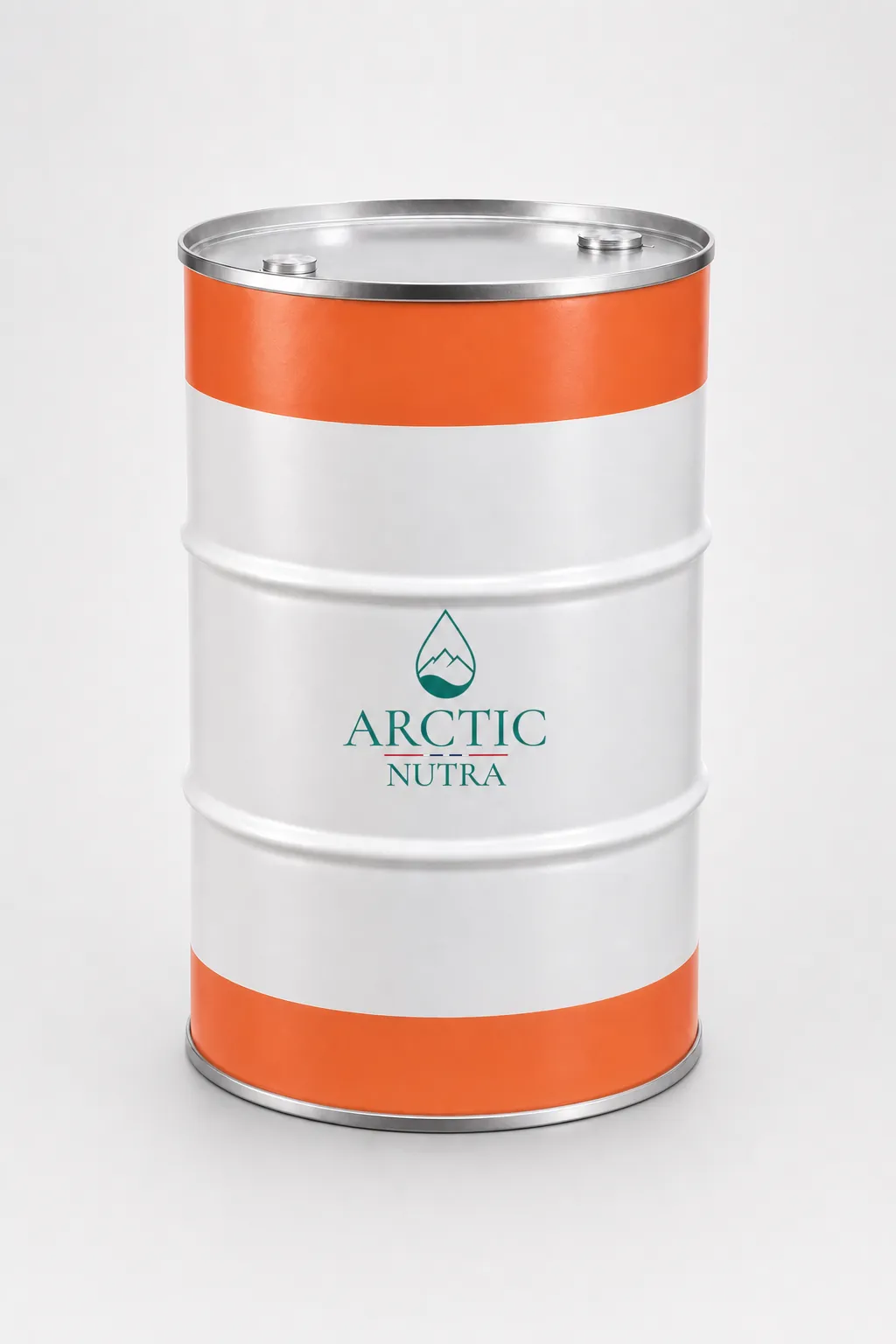
Supplied in bulk as a 200 L steel drum (approximately 190 kg), with a Certificate of Analysis on every shipment.