
Source
Where it comes from.
Refined and deodorised tuna oil (Thunnus spp.), extracted by physical means from fresh fish of the family Scombridae. The fatty-acid composition meets European Pharmacopoeia requirements.
Specification
Typical specification.
| Fatty-acid composition | |
|---|---|
| Total omega-3 | Min 35% |
| EPA | Min 5% |
| DHA | Min 25% |
| Oxidation parameters | |
| Peroxide value | Max 5 |
| Anisidine value | Max 20 |
| Acid value | Max 0.5 |
Form · Refined, deodorised · Heavy metals & contaminants, full panel in spec sheet
Applications
What brands use it for.
Formulated where DHA leads rather than EPA, for products positioned around DHA-specific outcomes. The relevant claims are the brand owner's regulatory responsibility.
Differentiator
What sets it apart.
An exceptionally DHA-forward profile — minimum 25% DHA and 35% total omega-3 — distinct from the more EPA-balanced body oils, and typically supplying around 270 mg EPA+DHA per gram.
Fatty-acid science
What the fatty acids support.
Brain function
DHA contributes to maintenance of normal brain function at 250 mg/day (EU Reg. 432/2012).
Vision
DHA contributes to maintenance of normal vision at 250 mg/day (EU Reg. 432/2012).
Heart function
EPA and DHA contribute to normal heart function (EFSA authorised at 250 mg/day in the finished supplement, EU Reg. 432/2012).
These reflect established research on the fatty acids the oil contains. Health claims on finished supplements are the brand owner's regulatory responsibility.
Formats
Bulk delivery.
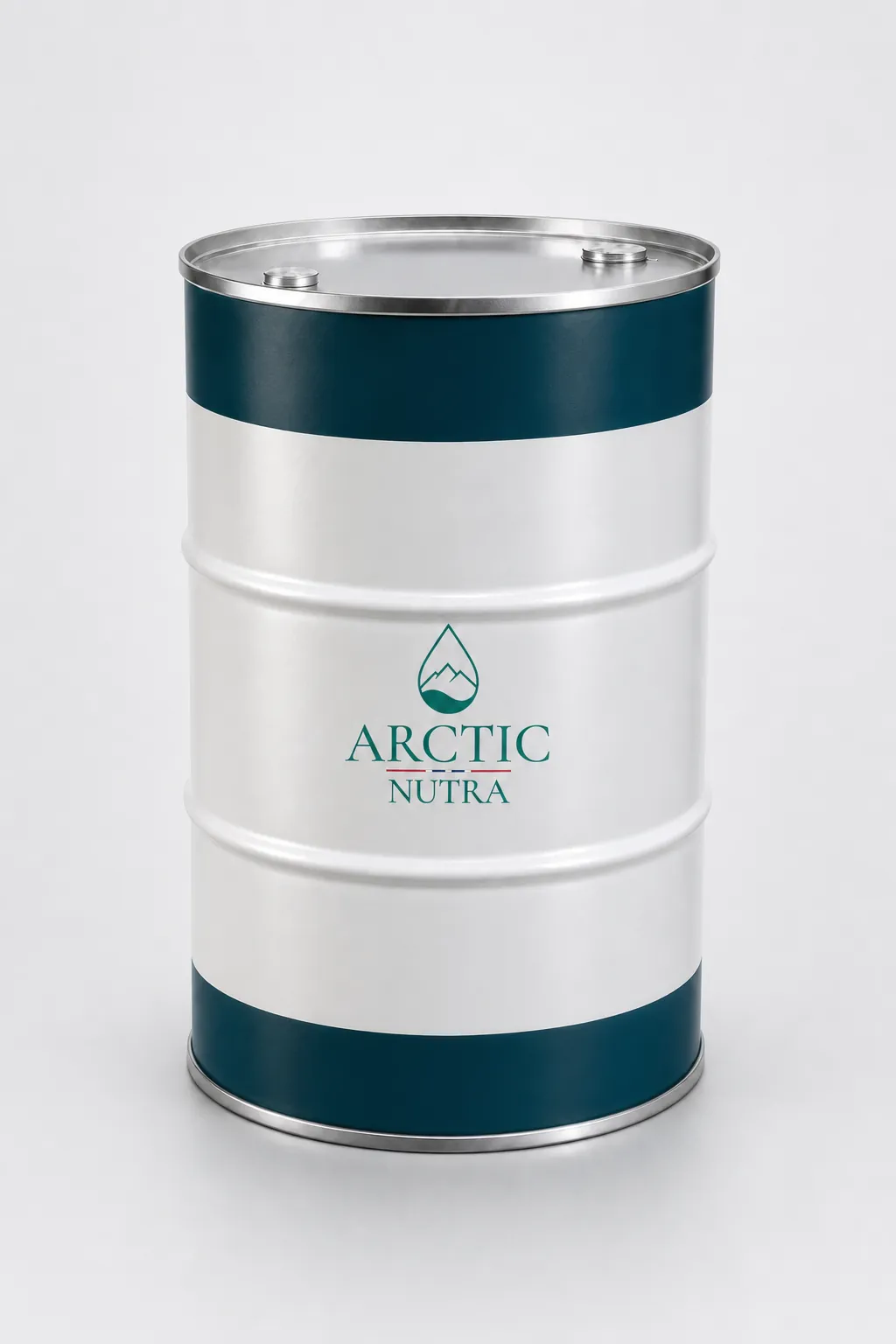
Supplied in bulk as a 200 L steel drum (approximately 190 kg), with a Certificate of Analysis on every shipment.